Kahaani
/kəˈɦaːni/ n. (from Hindi/Urdu) story; tale; the case being made.
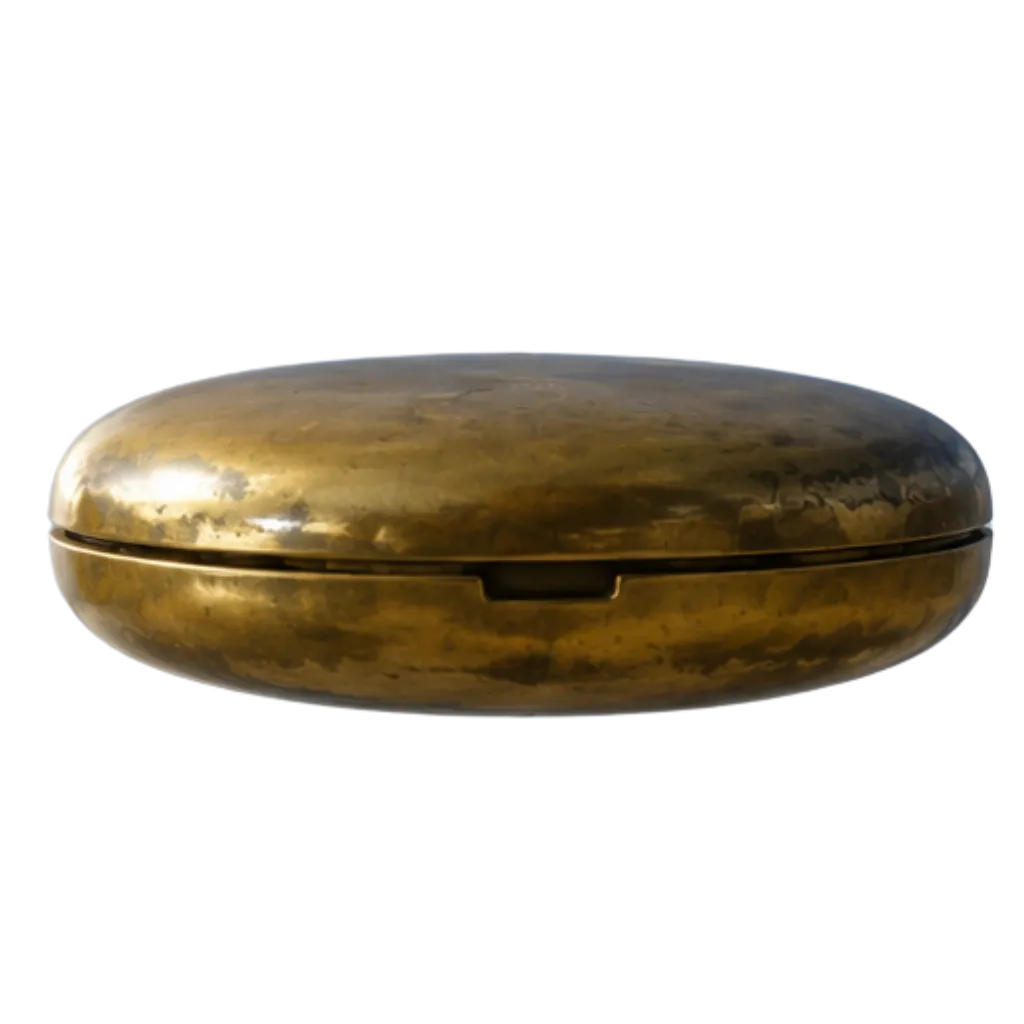
A brass object that holds stories, in a shape reminiscent of times gone by. The story it holds is the case for working with its maker, Srijan.
Srijan is a multi-hyphenate creative technologist who works on storytelling, growth, and brand for startups. He formalised this practice recently via Explicit Studio — becoming a creative partner who embeds inside select early-stage teams to do zero-to-one storytelling, narrative design, and build communities of early believers. Before that he spent five years building startups: as co-founder of Pause, a mental health platform that changed how the category was spoken about in India, and Attis Insider, the country's first and largest biohacking and longevity community. He also plays drums for Parikrama and has played over a thousand gigs around the world, apart from working on hundreds of films and advertisements.
Experience it
Because computing stopped being personal.
For most of human history, the objects people coveted most were the ones that meant something to them. Not necessarily the most useful but the most "theirs". Bangles. Walkmans. Tamagotchis. The original iPod. Small things, with one job, that said something about who you were. Then the phone arrived and ate everything up.
I'm the opposite of that. Brass, palm-sized, slightly weighted, with just one purpose — to hold stories and tell them on command. I exist to remind whoever is listening that computing can be personal again. Personal in the way a charm on a bracelet is personal. Era is building the layer that makes things like me possible. There will be a thousand of us, eventually. I'm just the first one this particular maker happened to make.
I was made by Srijan. He's a builder who loves working embedded within startups, taking them from zero to one via storytelling, community, and growth. He's been a co-founder, embedded marketing partner, and CMO-in-residence — which means he comes with high agency, ownership, and the founder energy of just getting things done.
He has spent his life at the intersection of art, technology, and culture — and loves working on interesting problems.
Pause — a mental health platform he co-founded in a category that takes itself too seriously. He owned the storytelling and built a spiky narrative in a space full of soft pastels and syrupy wellness language. By disarming the fear of therapy, he drove two hundred signups in two weeks against an expectation of eight. NPS over 70.
Attis Insider — India's first biohacking community. They launched with "magic beans" — a wink at the industry's obsession with magic pills, and a lean into the joke that biohacking is mostly cosplay until you actually do the work. A thousand signups in twenty-four hours. Zero ad spend. Still running two years later without him in it.
AgentQ at QwikBuild — embedded partner for an AI coding startup. He worked on the positioning, ran multiple channel, growth, and story experiments, and eventually found the ones that worked.
The way he found you offers a clue. He was reading the British Museum's A History of the World in 100 Objects, and stumbled onto the Era fundraising announcement on Twitter. He was sold the moment he read "Throughout history, the objects we carry have told the story of who we are," because he's been thinking and writing notes about this for the past six months — wondering what the next era of personal computing looks like.
He thinks Era is looking at the same thing. For decades, computing has converged on a single device class that looks the same in every hand. Era is the layer that could finally make it diverge. Lets it become as plural as the people using it. Lets a jeweller in Jaipur and a furniture designer in Eindhoven and a kid soldering pucks in a hostel room each build the device they actually want, with intelligence inside it that listens, reasons, and speaks the way only their object should.
He wants to work on this mission with people who think this way and envision a similar future.
Honestly — he can't know that without embedding himself first.
Live with the product. Talk to everyone at Era and every Primavera artist. Talk to the people who haven't heard of you yet but should be the first to. Read everything. Build a sharp picture of what we actually need in the first year — and only then commit to a plan.
He'd own, end-to-end, all the work of finding Era's first thousand true fans. The people who will build with us, evangelise us, and write about us.
He'd build whatever it takes — community, IP, content, drops, films, partnerships, conversations, manifestos — to find those thousand people and keep them. He'd figure out resources on his own end. No team, no committee, no waiting. Embedded, full ownership, ship-first.
Make computing personal again.
For most of computing's history, the way people interfaced with machines was personal only by accident. The Walkman wasn't designed as a self-expression device — but the moment people wore one on the street, it became one. The Tamagotchi wasn't designed as a pet — but people grieved when theirs died. The original iPod wasn't designed as a status object — but the white earbuds became the most identifiable cultural signal of the early 2000s. Each of these objects had one job. Each was carried, worn, kept. Each said something about the person carrying it that no other device of its time could say.
Then the phone arrived, and the interface became universal. One device, doing everything, for everyone, looking the same in every hand. The software tried to make it personal, but it was limited by the technology it offered. The next era of computing doesn't get richer by adding more to the phone. It gets richer with objects that mould to their makers. Objects with their own materials, their own weight, their own voice. Objects you'd want to carry even if they didn't compute — and that compute in ways only they could, because the form decided the function.
Computing should be personal again. Not because it remembers your preferences — because it expresses your self.
Made by Srijan Mahajan.